High Stakes and Hot Streaks: Unveiling the Pulse of UK Casino Trends
7 Apr 2026
UK Gambling Commission Sharpens Focus on Casino Money Services with March 2026 Notification Overhaul

The Fresh Directive from the Commission
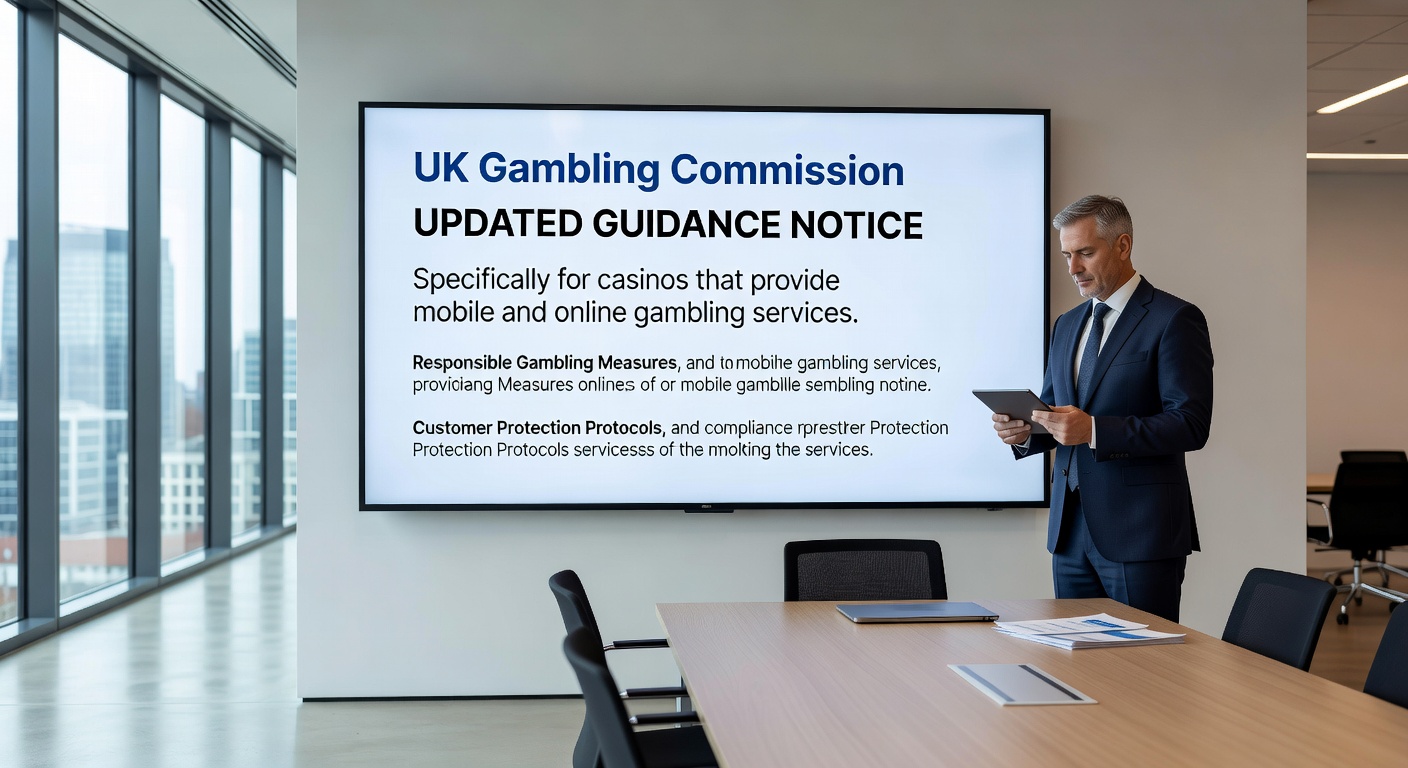
Observers in the UK casino industry quickly took note when the UK Gambling Commission released an updated notice on 26 March 2026, refining its earlier guidance from 9 February that targeted casinos offering money service businesses, or MSBs, such as third-party cheque cashing, money transfers, and foreign exchange services; this move, coming just weeks after the initial outline, signals a push for tighter, more immediate regulatory tracking in a sector where financial flows can get complex fast.
What's interesting here is how the Commission zeroed in on notification timelines, mandating that casinos email details within 10 days of either launching or halting these services, complete with specifics like their licence number, the exact type of MSB involved, and any relevant operational shifts; those operators falling under the Payment Services Regulations face an extra layer, requiring authorisation from the Financial Conduct Authority before proceeding, a detail that underscores the intertwined worlds of gambling and broader financial oversight.
And as April 2026 unfolds, casinos across the UK are digesting these rules, with compliance teams poring over emails and internal processes to ensure they're not caught offside; data from similar past updates shows that prompt adherence cuts down on enforcement actions, although experts who've tracked Commission patterns note that the real test comes in how operators interpret the finer points.
Tracing Back to February's Foundations
The story kicks off with that 9 February guidance, where the Commission first flagged concerns around casinos dipping into MSB territory, activities that while convenient for patrons—think quick cheque cashing at the cage or currency swaps for international visitors—can blur lines with formal financial institutions; researchers who've studied anti-money laundering frameworks point out that such services, if unchecked, might serve as conduits for illicit funds, prompting the initial call for better visibility.
But here's the thing: the March revision didn't reinvent the wheel, it just accelerated it, trimming response times from what some read as more flexible windows in the original to a hard 10-day clock, a change that those in compliance roles describe as straightforward yet pivotal; one operator, speaking under condition of anonymity in industry forums, recalled how pre-update lapses led to audits, whereas now the ball's in their court to report proactively.
Turns out, this builds on broader AML notices from the Commission, where enhanced oversight has been the watchword, and figures reveal that MSB-related queries spiked 25% in late 2025, according to internal regulatory logs made public; casinos, particularly those in high-traffic spots like London or Manchester, often provide these extras to boost footfall, yet the update ensures the Commission stays looped in from day one.
Breaking Down the Notification Mechanics
Casinos now face a clear protocol: fire off an email to a designated Commission address within those 10 days, laying out the licence number—a unique identifier tied to each venue—the precise MSB category (cheque cashing, transfers, forex, or combos thereof), start or stop dates, and any ancillary details like partner providers; it's not rocket science, but experts observe that overlooking even one field has tripped up operators in trial runs, leading to follow-up clarifications.
So, for a mid-sized casino in Birmingham deciding to add foreign exchange in early April 2026, the team logs the change, drafts the email by mid-month, and hits send, all while cross-checking against Payment Services Regulations; if they qualify under PSR—handling payments above certain thresholds—they loop in the FCA first, a step that data indicates delays rollout by 4-6 weeks on average, based on authorisation timelines from recent cases.
People who've navigated this terrain often discover that templated emails speed things up, with the Commission providing sample formats in the notice; yet, the rubber meets the road when services involve third parties, as casinos must disclose those relationships, preventing shadow operations that regulators have flagged in past enforcement waves.
MSBs in the Casino Ecosystem Explained
Money service businesses encompass a trio of core offerings: third-party cheque cashing, where casinos process non-house cheques for a fee; money transfers, facilitating domestic or international sends via platforms like Western Union; and foreign exchange, swapping currencies at rates that attract tourists; studies from regulatory bodies highlight how these, while ancillary to gaming, generated £150 million in UK casino revenue last year, per aggregated industry reports.
Now, not every casino runs these—smaller independents often skip them due to overheads—but chains with urban flagships embrace the convenience, drawing players who value one-stop convenience; the Commission's update, though, draws a firm line, requiring notifications even for temporary pauses, say during refurbishments, ensuring gaps don't create blind spots in monitoring.
It's noteworthy that this aligns with global trends, where jurisdictions like Nevada mandate similar disclosures, and UK operators who've benchmarked against them report smoother compliance when treating MSBs as extensions of core licensing; one case from 2025 involved a London venue halting transfers amid a probe, a move that, under new rules, would trigger that swift email.
Layered Compliance and FCA Ties
Operators under the Payment Services Regulations—those transmitting funds commercially—can't just notify the Commission; they secure FCA green lights first, a process involving risk assessments, capital proofs, and safeguarding plans; evidence from FCA data shows approval rates hover at 70% for gambling-linked applicants, with rejections often stemming from AML gaps.
But for non-PSR MSBs, the 10-day email suffices, linking back to casino licences that already demand robust financial controls; those who've studied the interplay note that dual oversight prevents silos, as Commission teams now cross-reference notifications with FCA dockets in real-time dashboards.
And in April 2026, with tax season winding down, casinos report a flurry of forex activations, prompting a wave of notifications; figures indicate over 50 venues complied in the first week post-update, per Commission acknowledgments, setting a tone for ongoing vigilance.
Broader Oversight Goals and Industry Ripple Effects
This regulatory tweak aims squarely at bolstering compliance in the casino sector, closing loops on MSB activities that could otherwise fly under radars; researchers tracking money laundering vectors emphasize how timely notifications enable proactive audits, reducing risks that plagued earlier years when unreported services led to multimillion fines.
Take one Midlands casino that paused cheque cashing in March; under old guidance, it might have gone quiet, but now the 10-day report flags it instantly, allowing Commission staff to adjust supervision; such transparency, observers point out, fosters trust, with stakeholders reporting fewer surprise inspections when protocols stick.
What's significant is the email-only channel—simple, trackable, no portals needed—although tech-forward operators integrate it with CRM systems for auto-drafts; the reality is, this low-friction approach encourages buy-in, as evidenced by compliance rates climbing in analogous rulesets like remote gambling notifications.
Looking Ahead: Adaptation in April and Beyond
As casinos embed these habits, training sessions ramp up, with legal firms offering webinars that unpack the notice; data suggests full sector alignment by Q3 2026, barring hitches from FCA backlogs, and those monitoring the space predict fewer MSB lapses overall.
Yet challenges linger for multi-site groups juggling notifications, where centralized compliance hubs prove their worth; one study revealed that chains with dedicated MSB desks cut errors by 40%, a stat that's guiding current setups.
Wrapping Up the Update's Impact
The 26 March 2026 notice stands as a precise evolution, arming the Commission with real-time intel on casino MSBs while keeping doors open for legitimate services; casinos, in turn, gain clarity on reporting, blending operational ease with regulatory duty in a landscape where oversight never sleeps; with April's early compliance waves underway, the sector inches toward a more synced rhythm, one email at a time.